

Many men quietly struggle with issues tied to aging, injury recovery, or sexual performance but hesitate to bring them up, even with a doctor. The silence often means they miss out on newer treatment options that could genuinely help, simply because these therapies rarely come up in casual conversation. Regenerative medicine has expanded well beyond what most people picture when they think of stem cells or surgery, offering targeted, less invasive paths to healing. This article breaks down several options men tend to overlook or feel awkward asking about, so you can walk into your next doctor’s visit with better questions and realistic expectations.
Joint and Tendon Repair Using Your Own Blood
Platelet-rich plasma therapy, often shortened to PRP, involves drawing a small amount of a patient’s blood, spinning it in a centrifuge to concentrate the platelets, and injecting that concentrate back into an injured area. The platelets contain growth factors that can speed up healing in tendons, ligaments, and joints that have been slow to recover through rest alone. Men dealing with nagging elbow, shoulder, or knee issues from sports or manual labor often turn to this treatment after more conventional options have stalled.
What makes PRP appealing to many is that it uses the body’s own material, which lowers the risk of allergic reaction compared to synthetic drugs. Recovery time varies, but most men return to light activity within a few days and full activity within a few weeks, depending on the severity of the injury.
- Commonly used for tennis elbow, rotator cuff strain, and knee tendonitis
- Typically requires one to three sessions spaced weeks apart
- Not usually covered by insurance, since it is often considered elective or experimental
- Minimal downtime compared to surgical repair
Hair Restoration Beyond Pills and Transplants
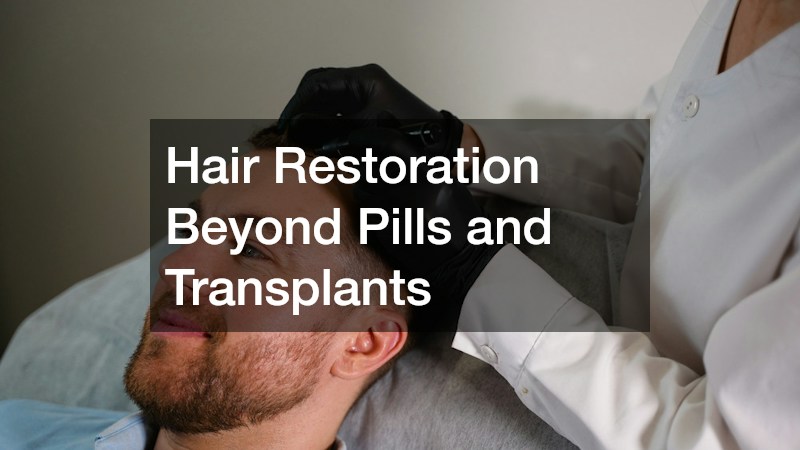
Hair thinning affects a large percentage of men by their forties, yet many quietly avoid discussing it beyond ordering supplements online. Regenerative approaches to hair restoration focus on stimulating dormant follicles rather than simply masking thinning with topical products. These treatments are often combined with existing medications for better results rather than used as a total replacement.
Microneedling paired with growth factor serums has gained traction as a lower-cost, lower-commitment alternative to transplant surgery. The idea is to create controlled micro-injuries in the scalp that trigger the body’s natural repair response, which can improve blood flow and follicle density over time. Results tend to be gradual, so patience and realistic expectations matter more than with faster-acting options.
- Often paired with finasteride or minoxidil for layered benefits
- Requires maintenance sessions every few months
- Works best on early to moderate thinning rather than complete baldness
- Minimal pain, usually described as a pressure or scratching sensation
Addressing Erectile Dysfunction With Targeted Injections
Erectile dysfunction is one of the topics men avoid discussing most, even though it becomes increasingly common with age, stress, and underlying health conditions like diabetes or high blood pressure. Beyond pills, there are injection-based treatments designed to improve blood flow and tissue health directly at the source. One option gaining quiet popularity is the P-Shot, a treatment that uses platelet-rich plasma injected into the penis to encourage tissue regeneration and improved circulation.
The appeal of the P-Shot for many men is that it addresses the physical mechanics of erectile function rather than only managing symptoms temporarily the way some oral medications do. It is typically performed in a single outpatient visit with a local anesthetic, and some men report noticeable changes within a few weeks. As with any emerging treatment, results vary by individual, and it works best when combined with broader lifestyle changes like better sleep, reduced alcohol intake, and regular exercise.
- Performed as an outpatient procedure, usually under an hour
- Often considered by men who have not responded well to oral medications
- Results generally build gradually rather than appearing instantly
- Best discussed with a urologist familiar with regenerative treatments
Muscle and Soft Tissue Recovery After Injury
Men who stay active into their forties and fifties often deal with soft tissue injuries that heal more slowly than they did in their twenties. Regenerative treatments for muscle strains and ligament tears focus on reducing inflammation while encouraging new tissue growth, rather than simply masking pain until the injury resolves on its own. This is particularly relevant for weekend athletes and men in physically demanding jobs who cannot afford long periods away from work.
Physical therapists and sports medicine doctors increasingly recommend regenerative injections alongside traditional rehab exercises rather than as a replacement for them. Combining the two approaches tends to produce better long-term outcomes than either option alone, since the injections support healing while the exercises rebuild strength and range of motion.
- Commonly used for hamstring strains, ACL partial tears, and chronic lower back pain
- Usually paired with a structured physical therapy plan
- Recovery timelines depend heavily on the injury’s severity and location
- Not a substitute for surgery in cases of complete tears or ruptures
Joint Cartilage Support for Early Arthritis
Men diagnosed with early-stage osteoarthritis often feel like their only options are pain medication or eventually surgery, but there is a middle ground worth exploring. Regenerative injections aimed at cartilage support can reduce inflammation in the joint and may slow the progression of damage when started early enough. This is especially relevant for knees and hips, which bear the most repetitive stress over a lifetime.
These treatments will not regrow fully destroyed cartilage, so expectations need to stay realistic, especially in advanced arthritis cases. However, for men in the early stages who are trying to delay joint replacement surgery, this approach can offer meaningful pain reduction and improved mobility for months at a time.
- Best suited for mild to moderate arthritis rather than bone-on-bone cases
- May need to be repeated every six to twelve months
- Often used alongside weight management and low-impact exercise
- Should be discussed with an orthopedic specialist before committing
Regenerative medicine offers a wider range of options than most men realize, covering everything from joint pain to hair thinning to more personal concerns like erectile function. The common thread across these treatments is that they work with the body’s own healing processes rather than masking symptoms indefinitely. If any of these issues sound familiar, the next step is a candid conversation with a doctor who specializes in the specific area of concern, rather than continuing to manage things quietly on your own. Asking direct questions now can save months or years of unnecessary discomfort later.